

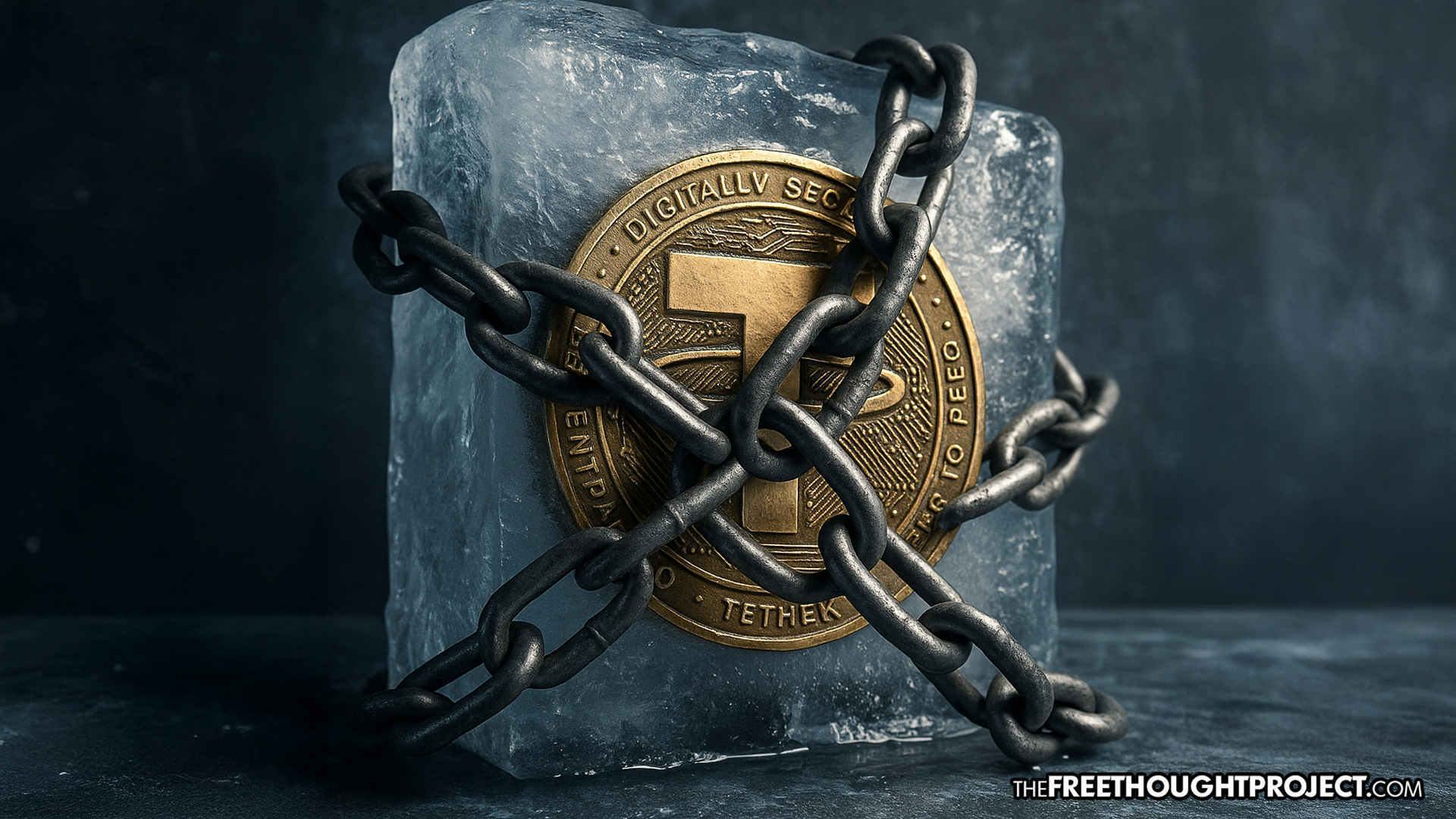


For years, Tether and Circle have frozen millions at the request of authorities — no trial, no charges, no due process. The latest seizure is just the latest reminder that government-compliant stablecoins are still programmable money designed for control.
Last month, Tether — the issuer of the world’s largest stablecoin — froze $24 million in USDT at the request of authorities, citing compliance with anti–money laundering regulations.
The move was immediately celebrated by the pro-centralization, pro-government crowd as a win for “financial safety.” But in reality, it’s another warning sign that centralized stablecoins are little more than programmable money subject to instant, unilateral seizure — no court order, no due process, no presumption of innocence. Just allegations and a compliance request.
And this isn’t some rare, extraordinary measure. It happens all the time.
A Pattern of Instant Seizure Without Due Process
Tether has repeatedly frozen and seized funds whenever authorities come knocking — often based solely on allegations:
- November 2023: $225 million in USDT frozen linked to alleged human traffickers at the request of the U.S. DOJ.
- November 2022: $46 million in USDT frozen following a law enforcement request.
- January 2022: $160 million in USDT frozen on the Ethereum blockchain.
- Ongoing ability to freeze or destroy USDT baked directly into Tether’s smart contract functionality.
And it’s not just Tether. USDC, issued by Circle, has done the same:
- July 2020: $100,000 in USDC frozen after a law enforcement request.
- August 2022: Tornado Cash smart contract addresses frozen following OFAC’s sanctioning of the privacy protocol.
If you hold these coins, you’re holding assets that can be erased from your control at the click of a button — no matter where you live, what you’ve done, or whether you’ve ever been charged with a crime.
Sadly, many people still don't see the writing on the wall, even those who should be in the know. The Cato Institute, in a recent piece, pushed back against the idea that government-compliant stablecoins are “CBDCs in disguise.” They had no problem admitting many of the risks these coins pose: centralization, regulatory choke points, and the ability of issuers to comply instantly with government demands, yet somehow they miss the bigger picture.
Cato’s only reassurance? Because these centralized stablecoins are run by “private companies,” they’re safer than CBDCs.
But as we’ve seen, “private” doesn’t mean trustless. Tether and Circle have demonstrated time and again that they will freeze and seize user funds with zero resistance — effectively acting as an outsourced arm of government financial surveillance. This is the same control architecture CBDCs promise, just with a corporate middleman in place of a central bank.
Proponents argue these freezes target terrorists, human traffickers, and criminals — and they might be right in some cases. Nobody here is arguing that criminal networks shouldn’t be stopped.
But power like this never stays confined to “the bad guys.”
We’ve already seen what happens when financial surveillance tools are turned against peaceful citizens: In 2022, the Canadian government froze the bank accounts of individuals who donated to trucker protests — without trial, without charges, and without a shred of due process.
If you think that can’t happen with government-compliant stablecoins, you’re not paying attention.
Stablecoins may look like a safe alternative to CBDCs, but they’re still programmable, centralized liabilities. They carry the same ability to blacklist addresses, freeze balances, and block transactions.
The danger is that people will adopt them thinking they’re “outside” the system — when in reality, they’re just in a slightly different cage. A cage that can be slammed shut at any moment.
This is why the right to private transactions isn’t optional. Once money becomes a permissioned ledger entry, you only get to spend it when — and if — the issuer allows it.
There’s a better option. Projects like Zano are built from the ground up for privacy and decentralization. Zano’s blockchain is designed to prevent exactly the kind of centralized interference that’s now standard practice with USDT and USDC.
And with the new Confidential Layer, users can move value privately across different blockchain ecosystems — escaping the reach of these corporate-gov “statist coins” entirely. You can swap out of traceable stablecoins into private crypto, including privacy-based stablecoins like fUSD, without going through choke points that demand KYC and report to financial intelligence agencies.
What Tether did last month wasn’t a one-off. It was the continuation of a years-long trend: centralized stablecoins acting as instant, unaccountable extensions of state power.
Today, it’s $24 million in “terrorist funds.” Tomorrow, it could be your account because you donated to the wrong cause, spoke out against the wrong policy, or simply ended up on the wrong list.
The solution is here, right now, and it's very easy to start. The time is now to move to tools that protect your privacy — because once this control system closes in around you, there’s no getting out.
