

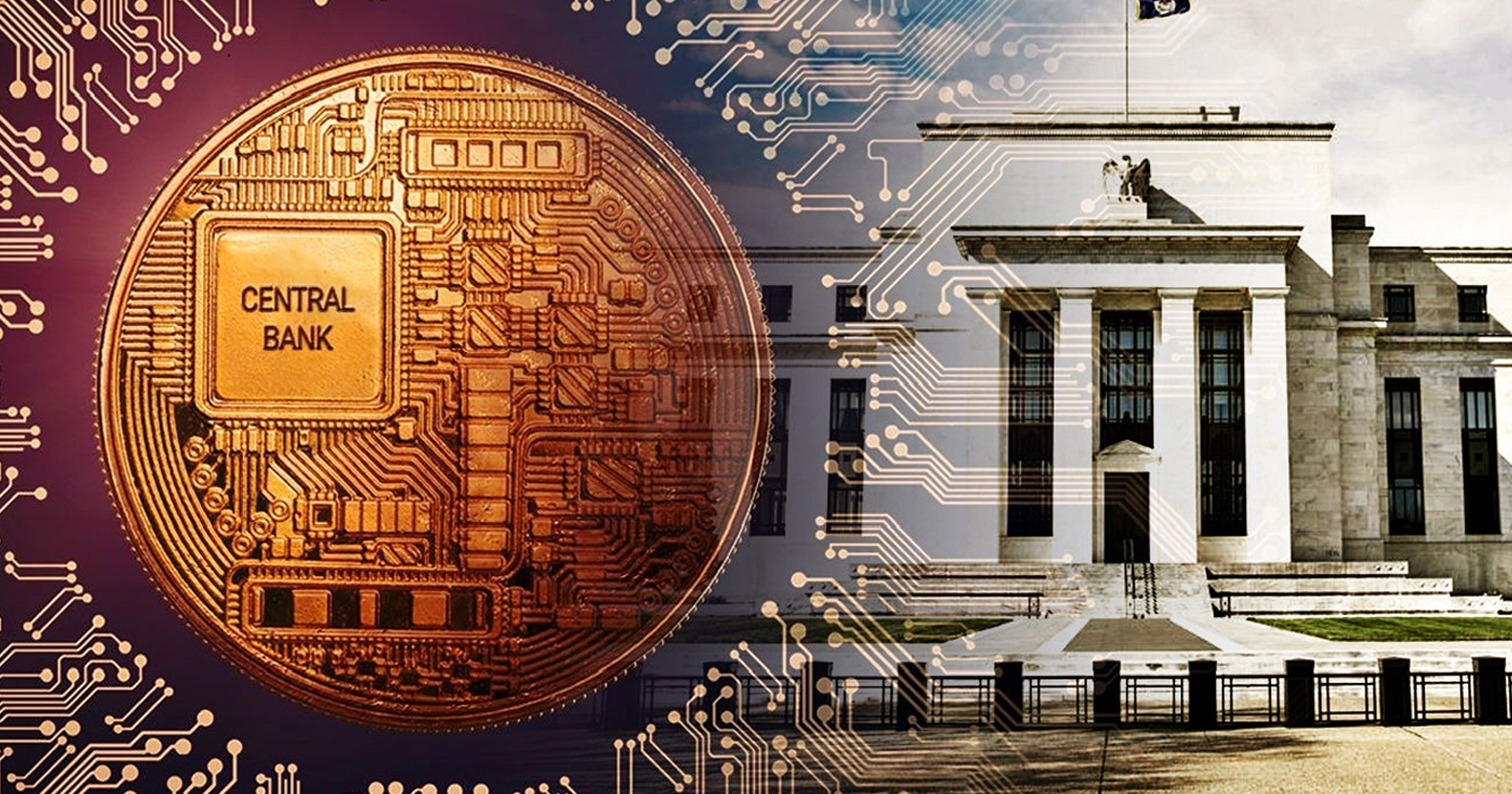


The game-changing development could have a profound impact on the banking system. But few people still understand it.
“Central-bank digital currency” doesn’t exactly roll off the tongue. But you might want to get used to saying it. These so-called CBDCs, or digital versions of dollars, yuan, euros, yen or any other currency, are coming, say those who study them. And depending on how they are designed and rolled out, their impact on the banking system could be profound.
One hundred and fourteen countries are exploring digital currencies, and their collective economies represent more than 95% of the world’s GDP, according to the Atlantic Council’s Central Bank Digital Currency tracker. Some countries, including China, India, Nigeria and the Bahamas, have already rolled out digital currencies. Others, like Sweden and Japan, are preparing for possible rollouts. The U.S. is studying the issue and has run trials of various technologies to enable a digital currency, although Fed chair Jerome Powell has indicated the U.S. central bank has no plans to create one, and won’t do so without direction from Congress.
Debates about the necessity, utility and potential pros and cons of digital currencies are often confusing, and confused, in part because every country rolling out a digital currency is doing it in its own way.
Generally, however, CBDCs can be roughly divided into two types: those designed for use by financial institutions and those designed for use by the general public.
Old vs. new
The first type is just a new way for central banks to transfer money to commercial banks.
More specifically, some central banks are testing whether money transfers between financial institutions—which in some cases can take days to settle—might be made safer and more efficient under a system in which central-bank money is represented by digital tokens and transactions are settled on a shared distributed ledger, concepts borrowed from cryptocurrency and blockchains. One such system is being tested by the New York Fed and a range of big U.S. banks and financial institutions.
The second type of CBDC is a digital version of fiat money made available to the general public through accounts held by a central bank or a commercial bank. From the perspective of a regular person or business, this kind of CBDC isn’t any different from the electronic money in their bank accounts today—it’s just a digital dollar. What makes these kinds of CBDCs special is that they are created, and held, in accounts that a central bank has direct access to. If another pandemic happened, for example, the Fed could just deposit stimulus “checks” into every U.S. citizen’s digital-currency account.
This type of CBDC represents a departure from the way money is created and distributed today, in that everyday people would now have accounts, or “wallets” that contain money created by their country’s central bank itself, instead of by their commercial bank. It represents a profound shift for central banks, from their traditional role as providers of money to a country’s banking and financial system, to connecting directly with everyday people.
China’s digital yuan is one such currency, and it can be used by everyday Chinese people through existing, and very popular, digital payment services like Alipay and WeChat Pay. India’s digital rupee is an equally bold experiment in allowing the country’s citizens to transact with a digital version of their currency in a way that could bypass traditional banks.
Question of control
At this point, the average person is probably wondering why, in a world in which billions of people have become accustomed to paying for things with electronic payment systems already, anyone needs a digital version of their currency.
The answer to that question depends on the motivations of the central banker, analyst or academic you ask. Many who study digital currencies argue that at the most basic level, a digital currency is all about control. The rise of cryptocurrencies—which are another form of digital money, but one that isn’t controlled by a government or other central authority—and the potential of one nation’s digital currency to eat away at the dominance of others’ has driven interest in official digital currencies.
“There’s a worry that if we don’t launch a digital currency in the U.S. or Europe, China will set all the standards for them, and then we’ll be at a disadvantage,” says Megan Greene, global chief economist at the risk and financial advisory firm Kroll. “Also, digital currencies like crypto really scared the bejeezus out of central bankers.”
What central bankers and other interested parties—like the Biden White House, which in a September report outlined the possibilities of a digital U.S. dollar—fear is the potential of cryptocurrencies to wrest control of the creation and transfer of money from central banks, leaving them without the tools they currently have for preventing their respective economies from running too hot or too cold.
All of these threats remain entirely hypothetical for now, says Eswar Prasad, an economist at Cornell University. In his book “The Future of Money,” he outlines the other reasons that policy makers give for wanting to create digital currencies.
Perhaps the most noble of those reasons is financial inclusion. In the U.S., only about 5% of people don’t have a bank account. But in other countries, such as the Bahamas, which was the first country in the world to implement a digital currency, the figure is much higher—around 18%, according to the country’s central bank. If everyone had access to an account with their country’s central bank, and could use it to transact instantaneously with others using a digital currency, for a minimal or no fee, the idea is that it would bring many more people into the regional and even global financial system, with all the benefits that attend.
Less privacy
On the other hand, the potential downsides of a digital currency, even one initially intended for only the most benign purposes, could be profound, says Dr. Prasad.
First, there is the obvious issue of privacy. A digital currency could allow governments to track every transaction a person makes, no matter how minute. This level of transparency would be a powerful disincentive to using these currencies for crime or fraud, but it could also open the door to new kinds of social control, especially in countries with already-scant protections for human rights.
