



Food companies, including Coca-Cola, PepsiCo and Mars, have sued governments 239 times between 2010 and 2025, according to Lighthouse Reports’ investigation. The analysis examined lawsuits in six countries, including the U.S., Britain and India. Most of the lawsuits focused on food products’ labels, which detail the ingredients and nutritional value.
(Investigate Midwest) Companies such as Coca-Cola, PepsiCo and Mars have regularly sued governments around the world in an effort to prevent public health proposals from being implemented, according to new reporting by Lighthouse Reports and a slew of media partners.
Diets full of ultraprocessed foods — such as fast food, cereals, soft drinks and protein bars — have been linked to poor health outcomes. Governments around the globe have responded by adding warning labels on packages and placing restrictions on marketing.
To fight back, food companies have sued 239 times between 2010 and 2025, according to Lighthouse Reports’ investigation. The analysis examined lawsuits in six countries, including the U.S., Britain and India.
Most of the lawsuits focused on food products’ labels, which detail the ingredients and nutritional value.
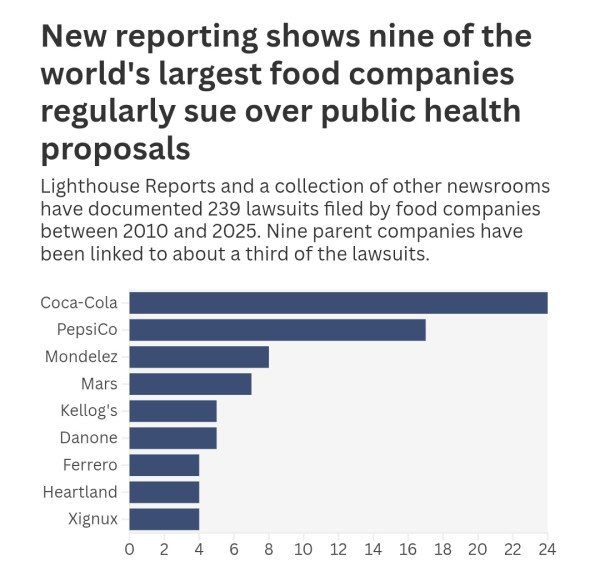 Source: Reporting by Lighthouse Reports and others">By: Sky Chadde, Investigate Midwest, Source: Reporting by Lighthouse Reports and others
There wouldn’t be a slew of lawsuits if labeling wasn’t effective, a public health expert at New York University told The Guardian.
“The lawsuits tell us that public health measures reduce sales of unhealthful products,” she said.
The vast majority of lawsuits were filed in Mexico, where many of the country’s children and adolescents are considered overweight.
After the country instituted a labeling requirement for soft drinks, a local company that bottled Pepsi sued, saying the labels “demonized” the product, according to Lighthouse Reports. Judges rejected the legal argument.
The new reporting also highlights an example in the U.S.
A small city in California instituted a tax on soft drinks. Then, a group bankrolled by Coca-Cola, PepsiCo and the maker of Dr. Pepper started recruiting young Black and Latino political candidates who campaigned against the tax, arguing it discriminated against poor people, according to Santa Cruz Local.
